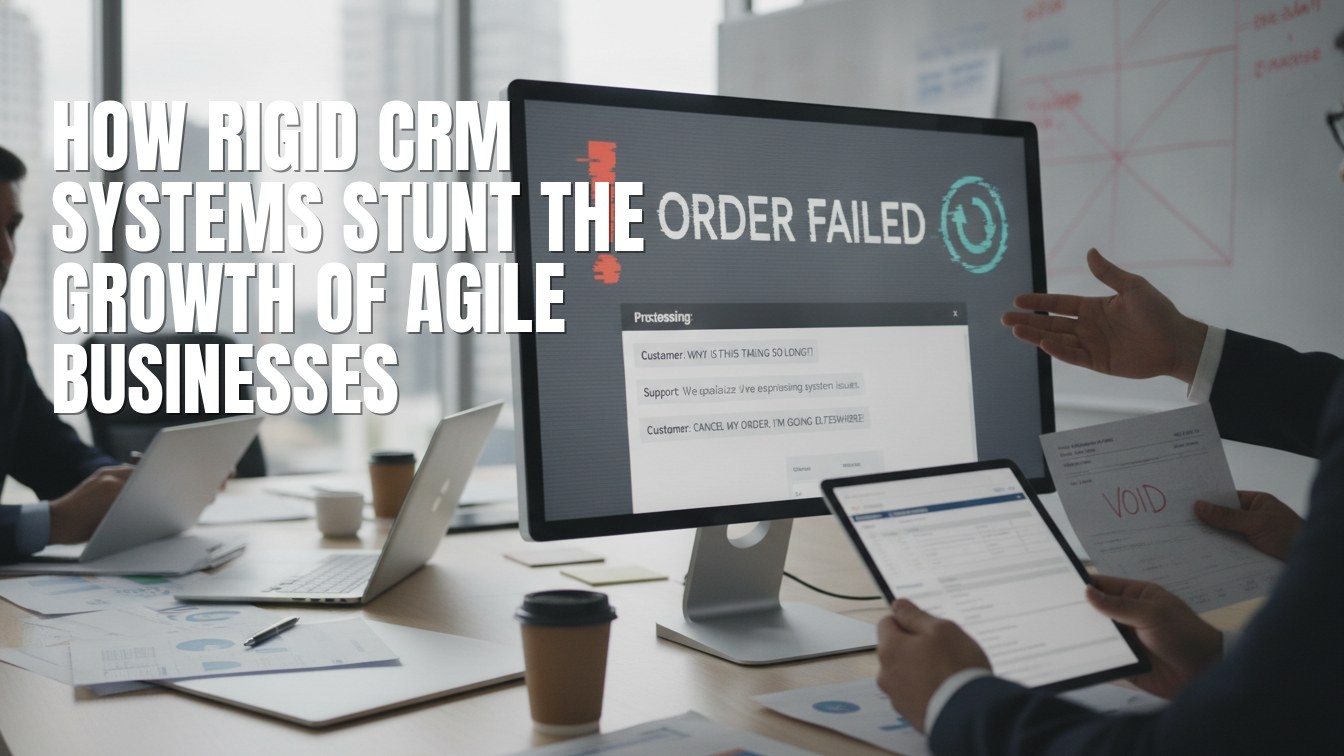
How Rigid CRM Systems Stunt the Growth of Agile Businesses
8/17/2026, 2:40 PM · By Yossi Medina | Service: Custom CRM Software Development
TL;DR
As businesses experience rapid growth, the limitations of rigid CRM systems can become increasingly apparent, creating operational bottlenecks and stifling efficiency. In contrast, custom CRM solutions can adapt to evolving workflows, providing the flexibility necessary for continued success.
Rigid CRM systems can hinder quick decision-making and adaptability in fast-growing businesses. Custom solutions offer the flexibility needed to streamline workflows and optimize operations.
Identifying the Limitations of Rigid CRM Systems
In the fast-paced world of business, agility is key to sustaining growth and meeting customer demands. However, many organizations find themselves reliant on off-the-shelf Customer Relationship Management (CRM) systems that fail to align with their evolving workflows. These rigid systems often create significant operational friction, leading to inefficiencies, data silos, and a lack of integration across business processes.
The pressure of rapid growth can expose the vulnerabilities of a generic CRM solution. For instance, a retail company experiencing a surge in online orders may rely on a CRM that was designed for traditional, in-store sales. When faced with increasing customer inquiries and the need for real-time data access, teams can become overwhelmed by the limitations of their CRM, resulting in delayed responses and unsatisfied customers.
The Cost of Operational Bottlenecks
When a CRM lacks flexibility, the ramifications can ripple throughout an organization. Time-consuming manual processes may emerge as employees struggle to input data into the system, ultimately causing delays in decision-making. Furthermore, if the CRM cannot provide customizable reports tailored to a business's specific needs, teams may waste precious hours sifting through irrelevant data.
To illustrate, consider a technology startup that recently secured funding and needs to scale rapidly. The company may initially implement a generic CRM to manage customer relationships. However, as the number of customers grows, so does the complexity of tracking interactions. Without the ability to adapt the CRM to specific project management needs or customer segmentation requirements, the team risks missing crucial follow-up opportunities, hampering sales efforts.
Adaptability: The Cornerstone of Effective CRM
A critical component of an effective CRM system is its adaptability to changing business processes. As companies grow, they often have to pivot quickly based on evolving market conditions and customer expectations. A rigid system restricts this agility, while a flexible, custom solution can be tailored to meet the specific needs of the business as they shift.
Companies must ensure that their CRM framework can handle not just their current operations, but also potential expansions and shifts in strategy. For example, a professional services firm may initially require a CRM focused on client communications but could later expand to need project management features and insights into employee performance. If their CRM cannot grow with them, they face the costly challenge of integrating a new system down the line.
Real-World Scenarios of Ineffective CRM Solutions
To further illustrate the pitfalls of rigid CRM systems, let’s examine a common real-world scenario. A marketing agency that has just landed a major new client may find its existing CRM's campaign tracking features inadequate. The agency's staff struggles to align their marketing efforts with customer feedback from the CRM because it lacks the necessary customization. As a result, the marketing campaigns miss the mark, leading to poor client satisfaction and retention.
Conversely, another agency that invested in custom CRM software development services preemptively designed its system to include advanced marketing analytics and integrated feedback loops. This adaptability allowed them to respond proactively to client needs, ultimately strengthening client relationships and boosting overall satisfaction.
What a Tailored CRM Solution Looks Like
The advantages of a custom CRM solution are numerous, particularly for fast-growing organizations. These systems are built specifically to streamline workflows, enhance collaboration across departments, and accommodate the unique data processing and reporting needs of the business.
For instance, a manufacturing company expanding its distribution network may require advanced inventory management features integrated into its CRM. By developing a custom solution, the company can repurpose data from different departments and ensure that inventory levels are synchronized with sales forecasts, a vital component in avoiding stockouts or overstock situations.
Ultimately, a tailored CRM not only addresses existing pain points for a business but can also proactively identify and support future needs based on scaling objectives. This strategic foresight is integral for businesses aiming to maintain momentum in a highly competitive landscape.
Aligning Growth with Custom CRM Development
The need for a custom CRM is evident in the face of the challenges posed by rapid growth. A custom solution provides the necessary flexibility to adapt workflows without the friction associated with generic systems. Organizations can confidently manage their customer relationships and internal processes with a tailored CRM that evolves alongside business needs.
Firms that strategically pursue custom CRM software development services can transform operational inefficiencies into streamlined processes that support their growth objectives. Whether through enhanced reporting capabilities, improved data integration, or a user-centric interface, the benefits of investing in a custom solution far outweigh those associated with sticking to a rigid CRM.
As you consider the future of your organization amidst growth, remember that the right tools can make all the difference. Investing in a custom CRM solution not only positions your business for continued success but also fortifies customer relationships through efficiency and responsiveness.
In summary, the limitations of rigid CRM systems can become significant obstacles for businesses striving for rapid growth. The adaptability of a custom CRM solution offers the flexibility necessary to navigate changing business landscapes while ensuring that workflows remain efficient and responsive to customer needs. By embracing tailor-made CRM systems, organizations can foster a sustainable growth trajectory and enhance overall operational productivity.
For businesses facing the constraints of generic CRM solutions, now is the time to explore options that can truly support your unique needs. If you're interested in how custom CRM solutions can enhance your operations, contact us today for a consultation.
Leveraging Data for Strategic Decision Making
One of the most significant advantages of a custom CRM system is its potential for data-driven decision-making. In today’s competitive landscape, businesses that harness the power of data can gain insights that not only inform immediate strategic decisions but also underscore long-term planning. Unlike rigid CRM systems, which often encapsulate data in ways that don’t always align with a company's specific needs, customized solutions allow for greater segmentation and analysis tailored to unique business models.
A well-designed CRM can provide actionable insights into customer behaviors, preferences, and trends. This data permits businesses to create more effective marketing strategies, improve service delivery, and ultimately enhance customer satisfaction. By having real-time access to data, organizations can quickly pivot their strategies in response to new information, ensuring that they remain agile in dynamic environments.
Moreover, companies can harness advanced analytics within their custom CRM solutions. Predictive analytics can help forecast customer needs and market trends, giving organizations a more strategic edge. Gone are the days of reacting to market shifts; with foresight driven by data, businesses can proactively position themselves to meet evolving demands.
Integration with Other Business Tools
The success of a CRM system is not just about its individual capabilities; it is also about how well it integrates with other business tools and platforms. Rigid CRM systems often come with predefined functionalities that cannot accommodate the specialized solutions a company may already be using. In contrast, a custom system can be designed to seamlessly integrate with an organization's existing software ecosystem, whether that includes marketing automation tools, accounting systems, or inventory management platforms.
The ability to connect disparate systems fosters a holistic view of business operations, promoting better collaboration among departments. For example, with a unified view of customer interactions across sales and support, teams can communicate effectively and enhance the overall customer experience. Custom CRM solutions can establish APIs or use middleware to bridge the gap between different software, ensuring that data flows freely and efficiently between systems.
This integration also streamlines reporting processes. When all data is centralized, generating comprehensive reports becomes significantly easier, allowing businesses to measure performance more effectively across all channels. As organizations grow, maintaining clarity within their operational metrics is vital for sustained success; custom CRMs facilitate this clarity, allowing teams to focus less on data reconciliation and more on strategic execution.
Enhancing Customer Engagement and Satisfaction
In an age where customer experience can make or break a business, a tailored CRM solution becomes a key player in driving engagement and satisfaction. Custom CRMs empower organizations to develop personalized communication strategies that resonate with their customers. By leveraging insights drawn from detailed customer profiles, businesses can craft tailored messaging that speaks directly to individual preferences and needs.
Segmented marketing campaigns, personalized recommendations, and targeted outreach can be effectively managed through a custom CRM. Businesses can design workflows that trigger specific actions based on customer interactions, such as follow-up notifications after a purchase or surveys soliciting feedback for improvement. This level of personalization fosters loyalty, as customers feel valued and understood by the companies they choose to engage with.
Additionally, custom CRM solutions allow for the incorporation of customer feedback loops directly into the system. Organizations can design features that prompt and capture customer feedback at various stages of the customer journey. This real-time ability not only aids in service improvement but also signals to customers that their opinions matter, further enhancing their overall experience.
Scaling with Business Growth
As businesses evolve and grow, their operational requirements inevitably change. Rigid CRM systems often struggle to evolve at the same pace, with many businesses outgrowing the limitations of their chosen platforms. This misalignment can lead to costly migrations or, even worse, persistent operational inefficiencies. Custom CRM solutions, by design, are built with scalability in mind, allowing businesses to add features, adjust workflows, and expand functionalities as they scale.
Whether a company is expanding its product line, entering new markets, or increasing its customer base, a custom CRM can adapt accordingly. Tailored solutions provide the room for growth without compromising performance or user experience. Moreover, companies can implement new functionalities as they arise, such as advanced customer service features or eCommerce tools, thereby ensuring that the CRM continuously supports their strategic objectives.
Adopting a phased approach during this scaling process can also make transitions smoother. As new features are rolled out, teams can be trained incrementally, ensuring that everyone remains adept with the system’s capabilities. This flexibility is a critical aspect that rigid systems cannot deliver, further affirming the need for customized solutions that align with organizational growth trajectories.
Empowering Employee Productivity
A less obvious yet vital benefit of customized CRM systems revolves around employee productivity. Traditional CRM solutions can often feel cumbersome, leading to frustration and resistance among staff who may find them counterintuitive or overly complicated. Custom CRM solutions, however, can be molded to fit the workflows and processes that employees are already accustomed to, greatly enhancing user adoption rates.
By involving employees in the design process of a custom CRM, organizations can ensure that the system addresses their pain points. Easy-to-navigate dashboards, streamlined data entry, and simplified task management contribute to an environment where employees can operate more efficiently. This increased efficiency directly correlates with higher job satisfaction, as staff are able to focus on value-adding activities rather than getting bogged down with administrative burdens.
Additionally, incorporating training and support tailored to how each team interacts with the CRM furthers empowerment. Employees will feel more confident in utilizing the CRM to its full potential, ultimately resulting in improved performance metrics across the board. Custom solutions thus not only cater to what the business needs but also what employees need to thrive in their roles.
Fostering a Culture of Flexibility and Innovation
Adopting a flexible CRM framework is more than just a technological shift; it is about instilling a culture of adaptability among all team members. A custom CRM tailored to meet the needs of an agile business encourages teams to experiment with new workflows and processes. This promotes a mindset where innovation flourishes and employees are not constrained by rigid systems that limit creative problem-solving.
When businesses empower their employees with tools that can easily evolve along with their workflows, they cultivate an environment where challenges are met with collaborative solutions. Employees can tap into the rich data of a customized CRM, using it to identify trends, adjust strategies, and harness insights that direct the business toward its goals. The CRM evolves into a living entity that grows with the organization, continuously embedding its learnings into daily operations.
Furthermore, acknowledging that different teams have unique operations allows for segmented training programs. Custom CRM setups can include various modules specifically designed to cater to the distinct requirements of sales, marketing, customer service, and other departments. This level of specialization ensures that teams have access to the precise functionalities they need without overwhelming them with extraneous features that do not pertain to their tasks.
This tailored approach naturally leads to enhanced collaboration across departments. When the CRM reflects the diverse ways in which various teams engage with clients and data, it becomes a repository of shared insights. Teams can seamlessly join forces, utilizing the CRM's capabilities to align marketing campaigns with sales strategies or to provide customer service teams with a comprehensive understanding of client interactions. This interconnectedness nurtures a unified business strategy underpinned by reliable, real-time data.
The adaptability of a custom CRM can also facilitate more responsive decision-making. In today's fast-paced business environment, the ability to pivot quickly in response to market changes is crucial. Organizations that rely on rigid systems often find themselves lagging behind, unable to adjust their operations as quickly as needed. Conversely, businesses that implement customizable CRMs can rapidly implement adjustments based on user feedback or market developments that prioritization demands. Decision-makers are equipped with the relevant and timely information necessary to act decisively.
As employees engage with a CRM that genuinely meets their needs, they become champions for the system within the organization. Their positive experiences can cascade through the company, leading to widespread adoption and a unified approach to client management. This grassroots-level excitement can transform perception across departments, enhancing the overall organizational climate and creating a proactive attitude toward using innovative technologies.
Moreover, the investment in a flexible CRM solution translates into concrete financial benefits. Businesses that successfully align their operations with their customized systems will find enhanced customer retention, increased sales conversion rates, and ultimately improved bottom-line performance. When employees are empowered with the right tools and a culture of innovation is fostered, they tap into their full potential, leading to exponential growth for the entire organization.
In conclusion, the journey toward adopting a flexible, customizable CRM system is pivotal for agile businesses seeking growth in an ever-changing marketplace. By fostering a culture of flexibility and innovation, organizations can break free from the constraints of rigid CRMs, allowing both employees and the business as a whole to thrive in a more collaborative and effective work environment.
If you want this handled for your business, contact us today.