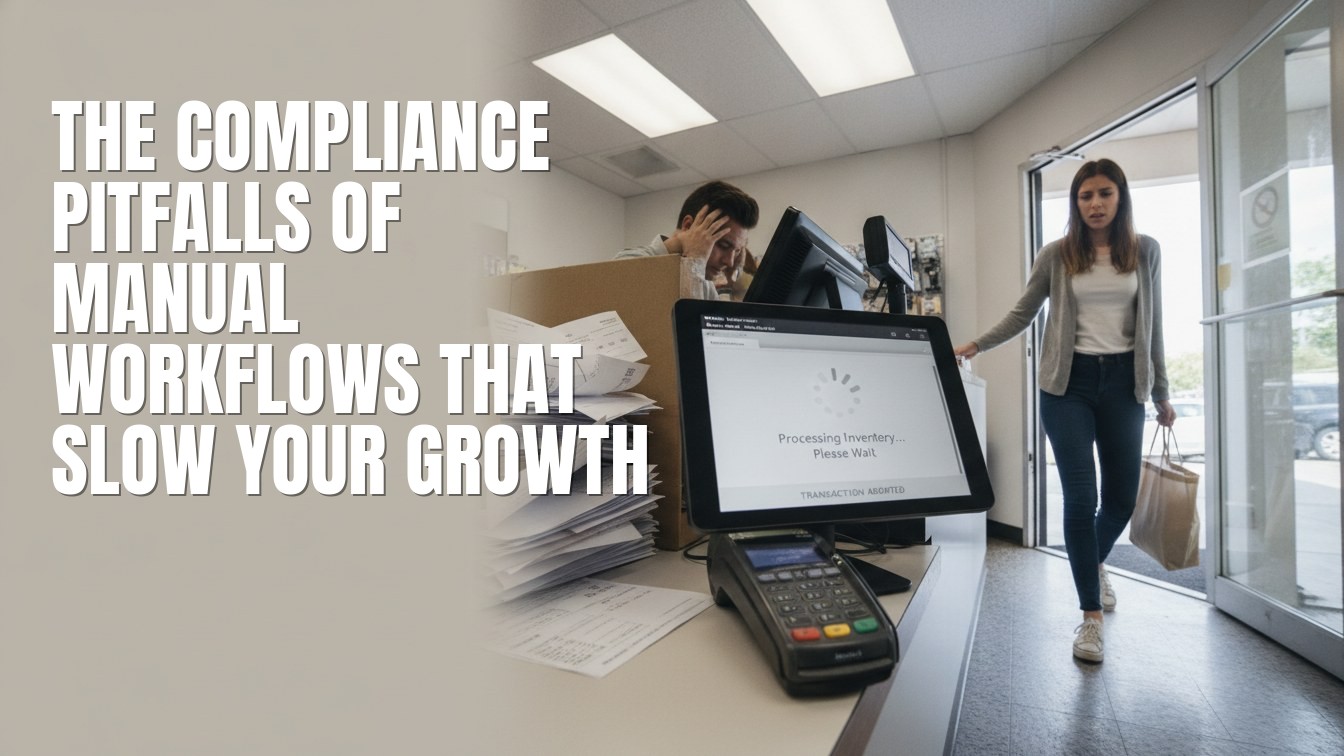
The Compliance Pitfalls of Manual Workflows That Slow Your Growth
7/29/2026, 10:50 AM · By Yossi Medina | Service: Agentic Workflow Automation
TL;DR
As regulatory landscapes become more complex, businesses face increasing risks from manual workflows that can lead to compliance breaches. By integrating agentic workflow automation, organizations can streamline processes and mitigate risks associated with evolving regulations, ensuring compliance and operational efficiency.
Navigating the intricate compliance landscape is essential for businesses. Discover how manual workflows can lead to compliance risks and how agentic workflow automation can help mitigate these issues effectively.
The Compliance Challenges of Manual Workflows
In an era where regulatory requirements are constantly changing, businesses that still rely on manual workflows face significant compliance risks. The problem is twofold: manual processes are not only time-consuming but also prone to human error, leading to potential violations and costly penalties. Compliance requires meticulous attention to detail, and when organizations depend on outdated or inefficient methods, they expose themselves to serious operational and legal repercussions.
Imagine a financial services company that relies on spreadsheets and email chains to track customer transactions. When a regulatory change mandates new reporting standards, the teams must scramble to adjust their processes. This results in errors, inconsistencies, and potential breaches that could have been avoided with a more streamlined approach.
Why Manual Processes Increase Compliance Risks
Manual processes create multiple points of failure that can easily lead to compliance violations. Here are a few reasons why:
- Error Prone: Human errors can happen at any stage, whether it’s data entry or failing to update a process in line with the latest regulations.
- Lack of Transparency: Manual workflows often lack visibility, making it hard for compliance teams to track and audit processes efficiently.
- Time Constraints: Relying on individuals to remember each step can lead to lapses, especially in high-pressure environments.
- Inconsistent Implementation: Without a standardized approach, different teams may interpret and execute compliance protocols differently, leading to discrepancies.
Consider the heightened scrutiny faced by regulatory bodies today. They expect organizations to demonstrate not only compliance but also accountability. A minor oversight can lead to significant fines and reputational damage in a world increasingly driven by compliance.
The Financial and Operational Costs of Compliance Breaches
The costs associated with non-compliance can be staggering. According to recent studies, businesses may incur penalties that reach millions of dollars following a compliance breach. However, the costs go beyond just fines. They include legal fees, loss of business opportunities, and the long-term damage to brand reputation.
For instance, a healthcare provider that fails to comply with health information privacy regulations may not only face hefty fines but may also lose patient trust, a precious commodity in that industry. The consequential damage can extend to legal battles and loss of market position, which often takes years to recover from. These scenarios underline the importance of proactive measures in ensuring compliance.
What Effective Compliance Looks Like
An effective compliance strategy involves clear processes, accountability, and continuous monitoring. Here’s what you should aspire to achieve:
- Standardized Procedures: Documented workflows ensure that all team members are on the same page and follow the same procedures consistently.
- Data Visibility: Implementing auditing mechanisms allows compliance teams to have real-time visibility into processes, thereby facilitating timely interventions when needed.
- Training and Awareness: Regular training sessions can help ensure that employees are updated on compliance regulations and understand their importance.
Having robust compliance processes in place not only reduces the risk of violations but also fosters a culture of transparency and accountability within the organization.
Transforming Compliance Through Agentic Workflow Automation
One solution that addresses the challenges of manual processes is agentic workflow automation compliance, which leverages technology to streamline compliance workflows. By implementing automation, businesses can minimize human errors, enhance transparency, and accelerate response times to regulatory changes.
For example, with automated systems, financial transactions are logged in real time, ensuring compliance with current regulations. Automation can also implement tracking and alert systems to recognize when processes need to be adjusted in response to regulatory changes. This proactive approach not only helps prevent compliance issues but also ensures that organizations can adapt quickly and efficiently.
Moreover, agentic workflow automation can significantly reduce the time compliance teams spend on repetitive tasks. By automating data entry, reporting, and compliance checks, teams can focus more on strategic initiatives rather than drowning in administrative duties.
Implementing agentic workflow automation compliance can empower your organization to manage workflows more effectively, reducing risks and ensuring compliance while allowing employees to focus on higher-value activities. If you find that your manual processes are contributing to compliance challenges, consider exploring how automation can revolutionize your operational efficiencies.
Your Next Steps Towards Enhanced Compliance
As regulatory frameworks continue to evolve, it’s crucial for businesses to stay ahead of compliance challenges. Partnering with an expert who understands the evolving landscape of regulations can provide the insights and solutions needed to navigate these waters effectively. Agentic workflow automation compliance can be a cornerstone of your strategy, ensuring that you manage compliance proactively and efficiently.
Need this handled for your business? Contact us today for a free consultation or audit, and let's discuss how we can help streamline your compliance workflows.
Understanding the Long-term Impact of Compliance Failures
One of the most significant consequences of not addressing compliance issues is the potential for long-term damage to a company’s reputation and financial stability. Non-compliance can result in hefty fines, legal penalties, and a loss of trust from clients and customers. Moreover, the damage extends beyond immediate financial ramifications, affecting relationships with stakeholders, investors, and partners. In today’s digital age, news of compliance failures travels fast, leading to potential boycotts and a decline in market share.
For B2B companies, the loss of trust can be particularly detrimental. Clients often seek to partner with companies that demonstrate a commitment to ethical practices, privacy, and security. Therefore, it’s essential for businesses to not only comply with regulations but also to transparently communicate their compliance efforts to their customers. This commitment to compliance can be a competitive differentiator, allowing businesses to build stronger relationships with clients who prioritize ethical operations.
Furthermore, compliance failures can impede growth. Businesses that face legal challenges spend valuable time and resources managing these issues instead of focusing on innovation and expansion. The complexity of regulatory requirements can lead to a significant slowdown in project timelines, as teams scramble to adjust to sudden changes in compliance standards. By automating workflows, companies can not only mitigate these risks but also position themselves for growth by allowing their teams to concentrate on driving business objectives forward.
How Automation Can Enhance Compliance Monitoring
Automation tools can significantly enhance compliance monitoring and reporting capabilities. Automated systems can continuously track regulatory updates relevant to your industry and instantly alert teams about changes that require action. This proactive approach reduces the likelihood of regulatory breaches and improves teams’ ability to respond quickly to changes.
For instance, the implementation of automated compliance management software can streamline the entire compliance process, from data collection to reporting. By utilizing dashboards that provide real-time compliance metrics, businesses can identify potential areas of concern before they escalate into larger issues. This level of oversight ensures that compliance is not merely an afterthought, but a fundamental component of your daily operational practices.
Moreover, automation facilitates better data management practices. Human errors in data entry or processing can lead to significant compliance issues; automated systems can mitigate these risks through accurate data handling and storage. Consider a scenario in which client data must be stored securely in accordance with data protection laws. Automated workflows can ensure that access controls are consistently applied and that data encryption protocols are in place, thus significantly lowering the chances of a data breach.
The Role of Training and Employee Engagement in Compliance
In addition to leveraging automation technologies, companies should prioritize training and employee engagement in their compliance strategies. A well-informed workforce is essential for maintaining compliance and for fostering a culture of accountability. Regular compliance training sessions can empower employees to recognize potential pitfalls in workflows and to contribute actively to compliance initiatives.
Furthermore, involving employees in the compliance conversation helps to demystify regulations that may seem daunting. By illustrating how specific regulations impact their everyday tasks, employees are more likely to take ownership of their roles in ensuring compliance. Engaging employees also nurtures a culture of transparency, where individuals feel comfortable raising concerns or asking questions about compliance issues.
Ultimately, the goal is to create a compliance-oriented mindset that continues to develop organically within the organization. This approach can help foster greater intra-team collaboration, where departments can share insights on compliance challenges they face and collaboratively devise solutions. Establishing cross-departmental compliance committees can be a useful strategy to achieve this, as it encourages diverse perspectives and problem-solving approaches from various sectors of the organization.
Measuring the Success of Your Compliance Initiatives
As your company transitions to automated compliance processes, it’s vital to have a framework in place to measure the success of your initiatives. Establishing key performance indicators (KPIs) that align with your compliance objectives can lead to better insights and improvements. Metrics such as the time taken to achieve compliance, the number of compliance breaches, and employee engagement levels in training programs can provide valuable data.
Regular audits of compliance processes also play a critical role in assessing the effectiveness of your compliance initiatives. These audits should not solely focus on identifying areas for improvement; they should also highlight successes and best practices. By recognizing what worked well, companies can reinforce positive behaviors and strategies that lead to successful compliance outcomes.
Furthermore, soliciting feedback from employees regarding compliance processes can offer crucial insights. Employees who work daily with these processes are often the first to notice inconsistencies or barriers that may not be apparent from a managerial perspective. Creating mechanisms for employees to provide feedback without fear of reprimand encourages a culture of continuous improvement, critical for sustaining compliance growth.
Ultimately, by taking a holistic approach that integrates technology, training, and feedback systems, businesses can develop robust compliance mechanisms that not only reduce risks but also pave the way for sustainable growth. The investment in automatic workflows and a culture of compliance will yield dividends in both operational efficiencies and stakeholder trust, positioning your business for success in an evolving regulatory landscape.
The Role of Technology in Enhancing Compliance
As organizations explore the interconnected nature of compliance and growth, it becomes paramount to consider how technology can play a pivotal role in mitigating the pitfalls of manual workflows. Automated systems can significantly reduce human error, which is often a primary source of compliance breaches. By digitizing compliance processes, businesses can ensure that rules are consistently applied, and necessary checks and balances are seamlessly integrated into workflows.
Investing in compliance management software provides organizations with real-time insights into their compliance status, allowing them to address potential issues proactively. These platforms often include features such as audit trails, automated reporting, and alerts for deviations from standard procedures, enabling businesses to monitor compliance in a more structured fashion. Furthermore, data analytics can reveal patterns that manual processes may obscure, highlighting areas that require immediate attention or improvement.
The deployment of machine learning algorithms can also enhance compliance processes by predicting potential risks based on historical data. This predictive capacity allows businesses to anticipate challenges and adapt their strategies accordingly, moving from a reactive stance to a more proactive approach. By leveraging technology in this way, organizations can not only meet regulatory requirements but also gain a competitive edge by ensuring that compliance becomes a seamless and integral part of their operational framework.
In tandem with technology, ongoing training is another crucial element of a robust compliance program. Regular training sessions empower employees with the knowledge they need to adhere to changing regulations and internal policies. These sessions should be interactive and engaging, fostering a deeper understanding of compliance issues rather than merely serving as a box-ticking exercise. Incorporating real-world scenarios that employees might encounter can also aid in reinforcing concepts and enhancing retention. When employees understand the rationale behind compliance measures, their commitment to upholding these standards grows considerably.
Moreover, fostering an environment that embraces compliance as part of the corporate culture can transform the approach to adherence. Employees who perceive compliance as central to their roles are more likely to take ownership of these processes, resulting in a more conscientious approach to their work. Leadership should model this behavior by prioritizing compliance across all levels of the organization. Recognition programs for teams or individuals who excel in adhering to compliance guidelines can further incentivize this proactive stance.
Building a Compliance-Focused Ecosystem
Creating a compliance-focused ecosystem requires collaboration across various departments within an organization. Compliance should not be viewed as a siloed function; instead, it should be embedded in the fabric of every business unit. For instance, when sales teams understand compliance implications, they can approach potential clients with a greater awareness of risk management, ultimately providing more trustworthy service and clearing the path for sustainable growth.
This cross-departmental collaboration can lead to the identification of synergies that enhance overall efficiency and effectiveness. For example, the marketing department can work closely with compliance teams to ensure that advertising materials accurately reflect regulatory standards, minimizing the risk of misleading claims. When departments work in tandem, they not only communicate necessary compliance standards but also extend their collective insight, creating a well-rounded perspective on potential risks.
The involvement of external partners, such as legal advisors or consultants specializing in compliance, can further enrich this ecosystem. These professionals can offer insights based on their experiences with other companies and industries, helping organizations to stay ahead of regulatory changes and implementing best practices. This outside perspective is invaluable; it can often provide actionable recommendations that internal teams may not have considered due to their everyday engagement with established processes.
Investing in a compliance-focused ecosystem requires resources, yet the long-term savings associated with reduced penalties, enhanced efficiencies, and improved reputational standing far outweigh these initial costs. By fostering a culture of compliance that permeates every layer of the organization, from the entry level to the executive suite, companies can position themselves not just as compliant players in their industries, but as leaders who prioritize integrity and ethical conduct.
As regulations continue to evolve and become more complex, organizations must remain agile and adaptive. The combination of technology, employee engagement, interdepartmental collaboration, and external partnerships enables businesses to navigate this turbulent landscape with greater confidence. Compliance is no longer simply about meeting regulatory demands; it is about creating a forward-thinking framework that propels growth while safeguarding against risks.
Ultimately, the success of compliance initiatives lies in the acknowledgment that compliance is an ongoing journey rather than a destination. Businesses that embrace this perspective will not only strengthen their compliance efforts but also unlock new opportunities for growth, reinforcing their position in an increasingly competitive marketplace. By continuously evaluating and refining compliance strategies and leveraging technology and collaborative approaches, organizations can achieve sustainable success and build a reputation that attracts customers, investors, and partners alike.
If you want this handled for your business, contact us today.