Why Generic CRMs Create Data Silos That Stifle Business Growth
8/11/2026, 1:35 PM · By Yossi Medina | Service: Custom CRM Software Development
TL;DR
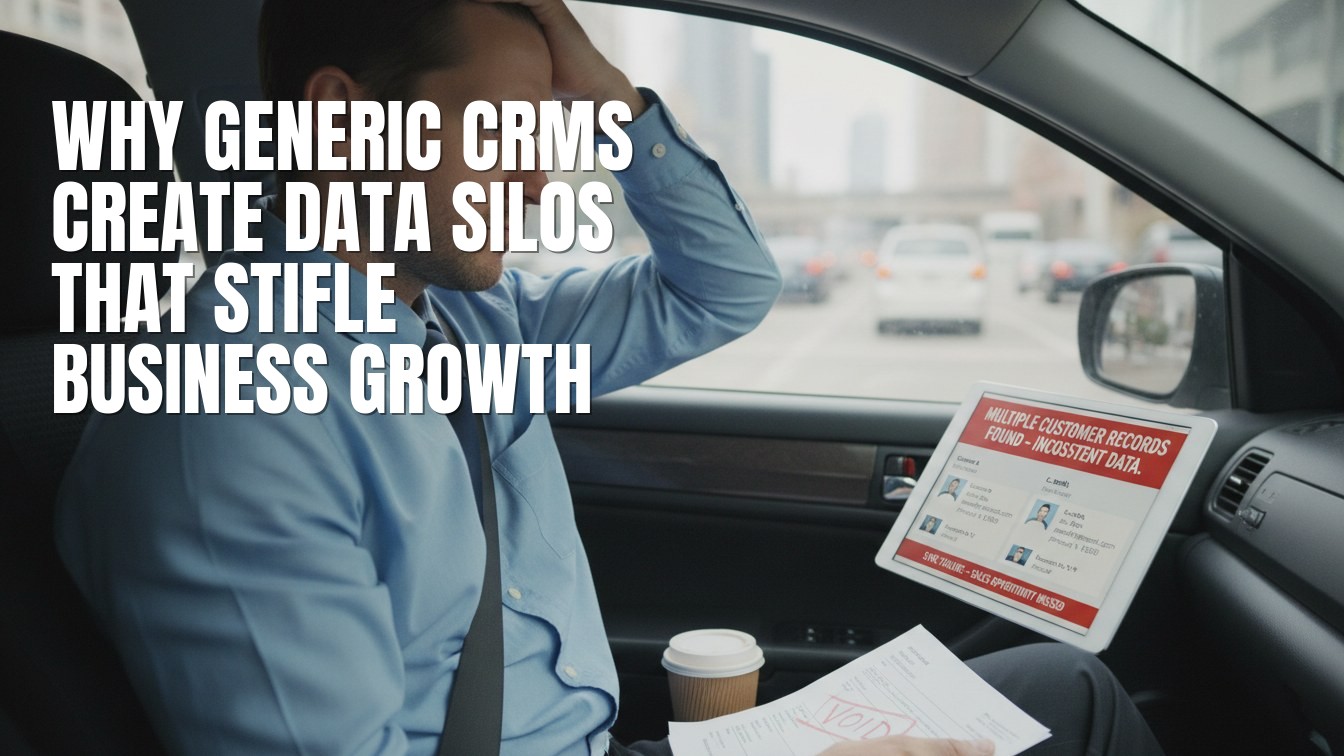
Generic CRM solutions can lead to problematic data silos that hinder collaboration, reduce efficiency, and inhibit decision-making within organizations. This article explores the hidden risks associated with these one-size-fits-all systems and highlights the advantages of opting for a custom CRM solution tailored to meet specific business needs.
Generic CRM systems often foster data silos that create inefficiencies and hinder growth. Explore the hidden risks and discover how custom CRM solutions can facilitate streamlined operations.
The Hidden Dangers of Data Silos in Generic CRM Solutions
Many businesses make the common mistake of adopting off-the-shelf CRM solutions, underestimating how these systems can create significant data silos within their operations. Instead of enhancing communication and collaboration, these generic platforms can lead to fragmented information, inefficient processes, and ultimately, stagnated growth.
As organizations evolve, the need for seamless data sharing between teams becomes increasingly crucial. However, generic CRMs are typically designed as one-size-fits-all solutions that do not cater to the specific needs of individual departments or workflows. This often results in teams storing and managing their data independently, creating pockets of information that remain isolated from others, severely impacting the organization’s ability to operate cohesively.
Why Do Data Silos Form?
Data silos develop when different teams or departments utilize disparate systems or software. This problem is particularly acute within generic CRM solutions that do not allow for adequate customization or integration with other tools in use across the organization.
Take, for example, a marketing team using a generic CRM to manage leads while the sales department relies on another software for tracking customer interactions. Both teams could miss critical data points that could inform their strategies, leading to misaligned campaigns and unoptimized sales processes. Over time, this lack of connectivity breeds confusion, inefficiencies, and workplace frustration.
The cost of these data silos can be quantified in lost revenue opportunities and wasted time. For instance, a study found that companies lose an average of 20-30% in revenue due to inefficiencies related to data management. Additionally, inconsistent data can result in poor customer experiences, which further detracts from long-term brand loyalty and success.
Real-World Scenario: The Cost of Inefficiency
Imagine a company employing a generic CRM struggling to track leads effectively. The marketing team could be generating a plethora of leads that are not effectively passed on to the sales team due to a lack of integration. If the sales team has no insight into the lead sources or marketing campaigns, they are less likely to exploit high-value opportunities, leading to reduced conversion rates and missed sales targets.
This situation not only reflects on the bottom line but also impairs relationship-building, as individual teams unknowingly duplicate efforts, fail to share insights, and provide disjointed communication, leading to a poor overall customer experience.
What Good Data Integration Looks Like
For organizations to ensure that data silos do not take root, a robust integration strategy is critical. Custom CRM software development offers a way to create a solution that aligns more closely with a business’s unique needs, which directly addresses the problem of data silos.
With a tailored CRM, businesses can facilitate real-time data sharing between departments. For example, when a marketing team runs a campaign, the real-time data flow allows the sales team to access lead information quickly, enabling prompt follow-up and engagement.
This integrated approach enhances collaboration, streamlines processes, and ensures that decisions are based on comprehensive and accurate data. Ultimately, custom CRM solutions can cultivate a culture of transparency where teams unite to pursue shared goals.
Aligning Workflows for Maximum Efficiency
A custom-built CRM can also provide the flexibility to align with the specific workflows of each department, reducing the friction associated with generic systems. Customizable dashboards can be tailored to meet the KPIs of different teams, from sales forecasts to marketing analytics, enabling teams to monitor their performance and improve their strategies based on real-time insights.
In contrast, using a generic CRM prevents many organizations from fully leveraging their data, forcing them to conform to a rigid system that may not represent their unique operational needs.
The Cost of Sticking with Generic CRMs
Choosing to stick with a generic CRM solution invites several risks. Not only do businesses risk facing operational inefficiencies and data mismanagement, but they also face potential declines in customer satisfaction and loyalty due to inconsistent engagements.
Moreover, generic CRMs’ lack of customization can lead to increased reliance on retrofitting plugins or additional tools that often complicate rather than streamline processes, increasing the technical debt and operational complexity.
Estimating the Hidden Costs
Consider the example of an organization employing a generic CRM that has become bloated with plugins. Each new tool added to address specific limitations creates further layers between the different teams, leading to inefficiency and disjointedness. Businesses often underestimate how these added layers can erode productivity, often multiplying through wasted employee hours and redundant tasks.
When looking at the total cost of ownership, the financial burden of a generic CRM system can exceed initial expectations. The upfront licensing costs may seem manageable, but ongoing maintenance, integration of third-party tools, and potential implementation timeframes add up significantly. Companies may eventually realize that investing in a custom CRM solution could have yielded better returns.
Leveraging Custom CRM Development as a Solution
Given the significant challenges posed by data silos arising from generic CRM solutions, investing in custom CRM software development presents a strategic opportunity for organizations to address these pitfalls proactively.
With tailored solutions, businesses can better ensure that their CRM aligns with internal workflows, promotes collaboration, and fosters data-driven decision-making without the drawbacks of generic systems. Custom CRM development also means that organizations can prioritize data security, compliance with regulations, and accommodation for future growth.
Tailored CRM solutions not only mitigate risks but also encourage innovation. As your business evolves, so can your CRM, allowing you to continue delivering high-value services to your clients while improving internal efficiency.
What to Consider When Developing a Custom CRM
When engaging with a development agency for custom CRM development, ensure the focus remains on:
- Clear Objectives: Define the specific business needs and challenges your custom CRM must address.
- Integration Capabilities: Ensure scalability and compatibility with existing tools.
- User Experience: Focus on intuitive interfaces and ease of use for all team members.
- Ongoing Support: Ensure your development partner provides regular updates and support.
Your investment in a custom CRM solution can prevent the risks associated with data silos and operational inefficiencies, allowing for a more fruitful and aligned organizational structure.
Enhancing Collaboration Across Departments
One of the most significant advantages of a custom CRM is its ability to foster collaboration across various departments within your organization. Generic CRMs often lack flexibility, causing departmental systems to become disjointed. In contrast, a tailored CRM can bridge the gaps between sales, marketing, and customer service teams, allowing them to work in synergy. When all departments are connected through a unified platform, sharing key customer insights and operational data becomes seamless, paving the way for more cohesive strategies.
For instance, a custom CRM can integrate marketing automation tools that not only track leads but also facilitate communication between marketing and sales. The sales team can access real-time data on lead behavior, allowing them to tailor their outreach effectively. Such interoperability removes the silos that a standard CRM might impose, ensuring that all departments remain aligned with the same overarching business goals.
Tailoring Functionality to Unique Business Processes
Every business has its unique processes and workflows that contribute to its identity. Generic CRMs are designed with a one-size-fits-all approach, making it challenging for them to adapt to the specific intricacies of your operations. Custom CRMs, however, can be developed to encapsulate and streamline your unique procedures, enhancing operational efficiency.
By incorporating features tailored to your business model, such as custom reporting dashboards, automated workflows, and specific data fields, a custom CRM can drive productivity to new heights. For example, if your sales process involves multiple touchpoints or customer segmentation strategies, a custom CRM can facilitate a workflow that corresponds precisely with these steps, ensuring that nothing falls through the cracks.
Improving Data Security and Compliance
In an age where data breaches and regulatory compliance are front and center, having a secure CRM solution is paramount. Generic CRMs may not provide adequate security features or compliance protocols specific to your industry. On the other hand, a custom CRM can be designed with built-in security measures that adhere to your industry’s standards and regulations.
Moreover, you retain control over sensitive customer data, allowing for custom access permissions and audit trails to safeguard against unauthorized access. The bespoke nature of a custom CRM enables organizations to implement encryption, secure APIs, and other security protocols tailored to their specific needs, ultimately protecting both employees and clients.
Leveraging Data Insights for Strategic Decision Making
Business decisions guided by data are more likely to yield favorable outcomes. With a generic CRM, companies often find themselves limited in their ability to glean insightful analytics due to rigid reporting structures. However, a custom CRM can be designed to generate meaningful insights specific to your business objectives.
Customizable data visualization tools can display critical metrics such as customer trends, sales pipelines, and service efficiency in ways that matter to your stakeholders. These insights empower decision-makers to act quickly and strategically, allowing your organization to pivot as market conditions change. The capability of tailoring reports ensures that everyone in your organization can access and interpret data that's pertinent to their roles, resulting in a more informed approach to strategy development.
Maximizing Return on Investment
Investing in a custom CRM might seem daunting compared to the seemingly lower initial costs associated with generic solutions. However, the long-term implications of using a tailored system can yield a significantly higher return on investment. By eliminating data silos and improving operational efficiencies, businesses often see enhancements in their overall productivity and increased customer satisfaction.
Moreover, the flexibility of a custom CRM allows for incremental upgrades, ensuring that as your business grows, your CRM can adapt and scale alongside it. Rather than incurring additional costs to upgrade to a more capable CRM later, a bespoke solution can evolve with your needs, minimizing disruption and enhancing user adoption throughout your organization.
Boosting Competitive Advantage Through Custom Features
Every business strives to differentiate itself from competitors. A custom CRM enables you to embed unique features that can give you a competitive edge. Whether it’s advanced customer segmentation capabilities, tailored marketing campaigns, or specialized reporting modules, customization creates opportunities for innovation that can set your business apart in a saturated market.
For example, if your company prides itself on exceptional customer service, integrating a bespoke ticketing system within your CRM can optimize service workflows and improve response times. This leads not only to higher customer satisfaction but also to greater client retention, which directly influences your bottom line.
Enhancing Customer Experience and Loyalty
Today’s consumers expect tailored experiences that resonate with their unique needs. A custom CRM empowers businesses to achieve this by offering a 360-degree view of each customer’s journey. By tracking interactions and preferences over time, your teams can deliver personalized communications that foster relationships.
With a bespoke CRM, organizations can segment customers based on various attributes such as purchase history, engagement levels, and feedback. This insight enables targeted marketing efforts and service enhancements that align with customer expectations. Consequently, delivering a seamless and personalized experience not only boosts customer loyalty but also bolsters brand reputation.
Preparing for Future Changes and Challenges
The business landscape is ever-evolving, and with changes comes the need for adaptation. A custom CRM is not merely a solution for your current needs; it is a strategic investment toward future adaptability. Unlike generic CRMs, which can become outdated or cumbersome as business requirements evolve, a custom-built solution can be continuously adjusted and improved upon.
This forward-thinking approach means your organization can pivot quickly amidst market fluctuations, technological advancements, or even shifts in consumer behavior. By staying ahead of the curve, your business is better equipped to seize opportunities and mitigate challenges before they impact operations.
Empowering Collaboration Through Data Integration
One of the critical aspects of a well-functioning organization is effective collaboration across departments. Generic CRMs often operate in silos, causing disjointed data repositories that hinder interdepartmental communication. When teams lack access to a unified data source, it can lead to misaligned goals and inefficient workflows. In contrast, custom CRMs allow for seamless integration with various tools and platforms used across an organization. This creates a central repository of customer data, facilitating easy access and sharing among sales, marketing, and customer service teams.
When all departments leverage the same data insights, they can cultivate a more cohesive strategy that enhances the overall customer experience. For instance, a marketing campaign can incorporate valuable feedback from the sales team, ensuring that messaging resonates with customer pain points identified during sales conversations. Similarly, customer service can troubleshoot issues based on sales interactions, providing more informed and timely support. This interdepartmental synergy not only fosters collaboration but also amplifies the effectiveness of each team’s efforts.
Custom CRMs can also enhance collaboration through automation. By automating routine tasks and enabling real-time updates, these systems minimize the potential for human error and ensure that everyone is on the same page. For example, when a sales representative closes a deal, the information is instantly available to the customer success team, allowing them to prepare for onboarding the new client promptly. This level of responsiveness enhances customer satisfaction and confidence in your brand.
Furthermore, customized solutions enable businesses to implement tailored workflows that fit their unique processes. This adaptability helps maintain momentum during periods of growth or transition, keeping teams aligned and focused on common objectives. As a result, the entire organization becomes more agile, better equipped to respond to new challenges, and poised to capitalize on emerging opportunities.
The Bottom Line
Relying on generic CRM solutions presents hidden risks that can severely hinder business growth. Data silos and inefficiencies derived from these systems can frustrate teams, degrade customer experiences, and impede decision-making processes.
By considering custom CRM software development, organizations can break free from the constraints of one-size-fits-all solutions. A tailored CRM can promote fluid data sharing, enhance collaboration, and ultimately drive efficiency and growth.
Are you facing challenges with your existing CRM? Ready to explore how a custom solution can transform your operations? Contact us today to discuss your unique requirements and discover how we can help.
If you want this handled for your business, contact us today.