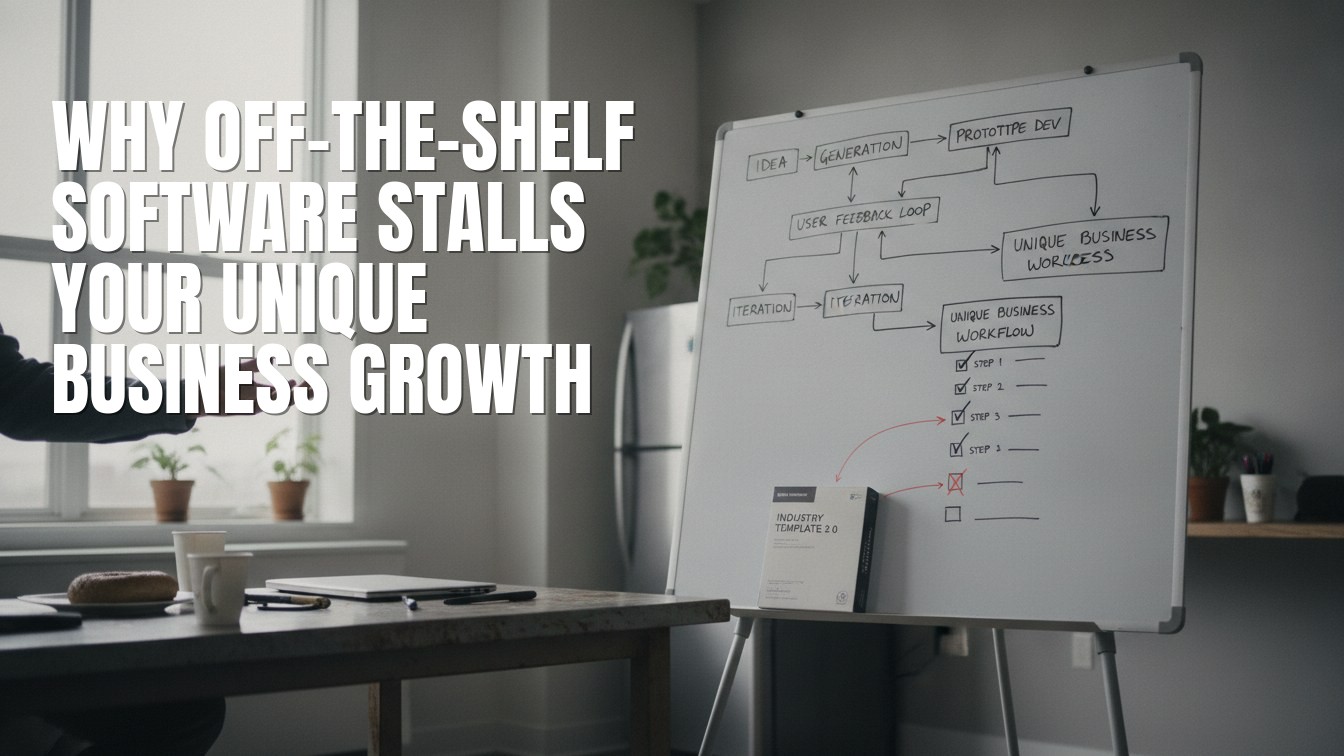
Why Off-The-Shelf Software Stalls Your Unique Business Growth
8/14/2026, 12:56 PM · By Yossi Medina | Service: Custom Web Development
TL;DR
Off-the-shelf software often fails to cater to the unique challenges of businesses, leading to operational friction, inefficiencies, and lost growth potential. Custom solutions can provide the flexibility and adaptability essential for modern enterprises. This post explores the limitations of generic software and highlights the advantages of custom alternatives tailored to your specific operational needs.
Generic software can introduce friction and inefficiencies that stall business growth. Discover how moving to custom alternatives can resolve operational challenges and unlock your business’s potential.
Understanding the Limitations of Off-the-Shelf Software
In an era where businesses face unique, complex challenges, relying on off-the-shelf software often results in missed opportunities and operational bottlenecks. Many companies choose these generic solutions to save time and money without considering the long-term impact on their workflows. However, the reality is that off-the-shelf software can introduce a myriad of limitations that ultimately hinder growth.
Consider an HR department using a standardized employee management system. While the software may cover the basics, such as tracking time and attendance, it often fails to account for specialized functionalities specific to the industry or company size. As a result, HR teams end up relying on cumbersome workarounds, risking data integrity and employee satisfaction.
These limitations stem from the inherent one-size-fits-all nature of off-the-shelf solutions. They are designed to appeal to the widest user base possible, prioritizing market reach over functionality. Thus, their utility is often predefined and restrictive, failing to adapt to the changing needs of individual businesses.
The Costs of Operational Friction
Operational friction arises when systems or processes introduce inefficiencies that slow down business activities. This can manifest in various ways, from manual data entry errors to stalled team communications caused by software limitations. The true cost of operational friction can be substantial, impacting everything from employee morale to overall revenue.
For instance, a retail company utilizing a generic point-of-sale (POS) system may face prolonged checkout times during peak hours due to lack of scalability. Customers experiencing delays are likely to abandon their purchase, directly affecting sales. Moreover, employees frustrated by software limitations may exhibit decreased productivity, leading to a toxic work environment and higher turnover rates.
To further illustrate this point, let’s take the example of a startup that initially deployed off-the-shelf project management tools. The rigid workflows and predefined project templates led to significant time losses and miscommunication among team members. Eventually, the startup recognized that it was necessary to pivot its strategy to regain control over its operations and project timelines.
Why Custom Solutions Lead to Enhanced Flexibility
Custom web development services offer tailored solutions that can adapt to the unique workflows of your business. By investing in software designed specifically for your needs, you can eliminate the constraints often associated with off-the-shelf software.
Imagine a non-profit organization tracking donations while managing volunteers. Off-the-shelf solutions may not adequately meet the diverse requirements, from managing fundraising events to tracking donor engagement. Custom software development allows the organization to create an integrated platform that provides all necessary functionalities within one seamless interface.
The benefits of custom solutions extend well beyond flexibility. These systems also empower businesses by facilitating meaningful insights into the performance of operations. Custom dashboards can be developed to monitor project timelines, manage resources, and analyze customer feedback, all crucial data points that can help drive strategic decisions.
Real-World Examples: How Custom Development Has Transformed Businesses
To comprehend the true impact of custom solutions, let’s explore cases where organizations transformed their business operations through tailored web development.
Consider a mid-sized manufacturing company that struggled with inventory management in a dynamic market environment. Turning to off-the-shelf software for inventory control, they encountered rigid processes that didn’t align with their operational needs. Frustrated with inaccuracies and delays, they opted for custom development of a solution that integrated seamlessly with their existing ERP system. As a result, they reduced inventory inaccuracies by 50%, streamlined order processing, and ultimately recovered control over their supply chain.
Another case involves a legal firm that faced challenges managing client communications. The firm initially relied on general practice management software, which proved to be too generic, leading to missed deadlines and client dissatisfaction. By implementing a custom client relationship management (CRM) solution, they gained enhanced automation, tracking, and security features that allowed them to better understand case timelines and client engagement, all while reducing manual data entry errors significantly.
A Path to Customized Solutions: Addressing Common Misconceptions
Despite the evident advantages of custom web development, common misconceptions often hold businesses back from exploring this route. A prevalent belief is that custom solutions are prohibitively expensive and time-consuming, yet this is not always the case. While up-front costs for custom development may be higher, the long-term savings from increased efficiency and lower operational friction often far outweigh initial investments.
Furthermore, many assume that maintaining custom solutions involves ongoing headaches or requires extensive in-house technical capability. In reality, partnering with a professional digital agency for custom web development ensures that you have ongoing support, scalability, and security without burdening your internal staff.
In most cases, organizations don’t need to build complete solutions from scratch. Potentially, incremental changes to existing systems, allowing businesses to refine their operations without a complete overhaul, can dramatically increase efficiency and productivity.
Pivoting Towards Customized Development Solutions
If your organization is grappling with operational friction caused by off-the-shelf software, consider how custom web development might fit into your strategy. Working with experts in this field allows you to create robust solutions tailored to your specific needs. With custom web development services, businesses can expect enhancements in workflow efficiency, better user experiences, and a pronounced return on investment.
As industries rapidly evolve, ensuring your software can adapt to your operational requirements is crucial. Custom solutions might be the answer to unlocking the potential for scalable growth and sustained competitiveness.
For those ready to explore how custom development can address your business challenges, learn more about our custom web development services and discover how we can help pave your way to increased efficiency and operational success.
Ultimately, the transition to custom solutions is not merely a technological shift but a strategic move that emphasizes your business's unique value and mission.
Need this handled for your business? Contact us today for a free consultation or audit to discuss how we can help tailor a solution for your specific needs.
The Impact of Scalability on Business Success
One of the most significant advantages of custom software solutions is scalability. As your business grows, so do your operational demands. Off-the-shelf software often comes with predefined limits, restricting your ability to scale effectively. Whether it's accommodating more users, integrating with new technologies, or expanding functionality, outgrowing these limitations can stifle your growth.
Custom solutions, on the other hand, are designed with your business's growth trajectory in mind. They allow you to effortlessly integrate additional features or scale components of your operations. This adaptability means that as market conditions change or your target audience evolves, your software can also evolve. In today's fast-paced digital landscape, having the ability to pivot quickly can mean the difference between leading the market and lagging behind.
Consider a manufacturing company that initially invested in a robust off-the-shelf inventory management system. While it served them well initially, as their business expanded and diversified its product lines, they found the software couldn’t handle the increased complexity. This led to order inaccuracies and inventory mismanagement, ultimately affecting customer satisfaction. A custom solution could have seamlessly adjusted to their changing requirements, reducing operational hiccups and enhancing overall performance.
Enhancing Customer Experience Through Personalization
Modern consumers crave personalized experiences. In B2B environments, this expectation extends beyond simply offering tailored products; it encompasses the entire customer journey. Off-the-shelf software often fails to provide the level of customization required to enhance interactions across various touchpoints. This can lead to missed opportunities in engaging your clients and nurturing long-term relationships.
Custom software allows you to create user experiences that reflect your brand’s personality while serving your clients' unique needs. This also means developing interfaces that resonate with the methodologies your clients are used to, ensuring smoother transitions and higher satisfaction levels. By enabling personalized user experiences, your business can foster a deeper connection with clients, ultimately leading to loyalty and repeat business.
For instance, a professional services firm might benefit from a custom client portal that delivers project updates, shares performance analytics, and allows clients to submit inquiries, all tailored to the specific needs of their clientele. This level of personalization not only enhances engagement but also demonstrates a commitment to understanding and fulfilling clients' needs.
Integration Flexibility in a Diverse Technological Landscape
Another critical consideration when evaluating software solutions is integration flexibility. In an era where businesses utilize a myriad of tools, from CRMs to ERP systems, having software that can integrate seamlessly with existing systems is crucial. Off-the-shelf solutions typically offer limited integration options, which can create data silos and disjointed workflows.
Custom software facilitates smooth integrations, making it simpler to connect disparate systems. This capability not only streamlines operations but also improves data flow across platforms, allowing for more informed decision-making. A manufacturing-led client, for example, may need their inventory management system to sync with a customer relationship management system to ensure timely order fulfillment. Custom software development can create those integrations, capturing relevant data in real-time and avoiding potential bottlenecks that arise from manual processes.
Moreover, as your business adopts new technologies, having a tailored software solution means that additional integrations can be designed and implemented easily, ensuring that your operations remain cohesive and efficient despite the influx of new tools or platforms.
Implementing Agility in Business Operations
A significant hurdle that companies face is maintaining agility in a market that changes overnight. Traditional, off-the-shelf software solutions often carry cumbersome structures and rigid processes that can stifle innovation and quick responses. In contrast, developing custom software fosters an agile operational mindset.
Custom solutions can be designed with agile methodologies in mind, allowing teams to iterate quickly based on feedback, test new features, and modify functionalities without major disruptions. This flexibility is vital for companies looking to remain competitive by adapting to market trends or customer requirements promptly.
A tech startup, for instance, might need to pivot its service offering based on user feedback. A custom-built platform allows them to quickly test new features, seamlessly rollback changes, or even reconfigure the user interface as necessary. By reducing the cycle time of implementing changes, businesses position themselves to react swiftly in ever-evolving markets.
Cost Considerations of Long-Term Investment
While the initial investment in custom software might be higher than that of off-the-shelf solutions, it's essential to assess the long-term cost implications. Off-the-shelf solutions may initially seem more economical, but they often lead to increased costs down the line due to limitations that require add-ons, upgrade fees, or entirely new software purchases as the business grows.
Over several years, these costs accumulate, often rising significantly above the projected budget. On the contrary, a custom-built solution, designed to scale and evolve with your business, can lead to considerable savings over time. Moreover, the efficiency gained through tailored software can enhance productivity, reduce waste, and ultimately provide a higher return on investment.
When considering your software strategy, it’s crucial to factor in these long-term implications and recognize that investing in a custom solution could lead to enhanced operational efficiency and reduced overall costs in the long run.
Ensuring Future-Proofing with Custom Development
Technology advances at a breakneck speed, and what works today may not serve your business in the future. A primary advantage of custom software development is its ability to future-proof your business. With a custom-built solution, you can adapt to new technologies and evolving market trends, ensuring that your software stays relevant and effective.
By choosing custom software, you ensure that your technology can seamlessly integrate with upcoming innovations, whether it's AI advancements, machine learning algorithms, or emerging technologies we have yet to even consider. This forward-thinking approach ultimately leads to sustained growth and competitiveness in the marketplace.
In a world where adaptability is vital, custom software enables your business to remain resilient amidst change. Transitioning from off-the-shelf solutions to a personalized software framework is not just a matter of preference but a strategic imperative in driving your unique business growth and achieving long-term success.
Enhancing Operational Efficiency through Custom Solutions
Another compelling advantage of custom software is its potential to enhance operational efficiency across various business processes. Off-the-shelf solutions often come with a one-size-fits-all approach, which may not align with your specific workflows or business model. In contrast, custom software is designed with your operational needs in mind, streamlining tasks and eliminating unnecessary steps that can bog down productivity.
When your team can rely on a software tool that meets their exact needs, the opportunities for efficiency multiply. For instance, automating routine tasks uniquely relevant to your business helps free up valuable time, allowing your employees to focus on more strategic initiatives that drive growth. This tailored approach to automation directly contributes to improved employee satisfaction, as team members encounter fewer frustrations from clunky, misaligned solutions.
Moreover, the flexibility of custom software allows for continuous improvements over time. As your business evolves, your software can adapt to accommodate new processes, improving your operational flow without disruptive overhauls. This is particularly relevant in industries where compliance and regulations are constantly changing. Custom software can be modified quickly to meet these adjustments, enabling businesses to remain compliant with minimal operational disruption.
Additionally, custom solutions can foster better data management and analytics. Off-the-shelf products often limit how data is collected, stored, and analyzed, which can restrict your ability to derive actionable insights. Custom software, however, allows you to tailor data structures and analytics dashboards to align with your specific performance indicators, enabling better decision-making founded on relevant metrics.
This deep integration of data analytics into your business model empowers you to track performance in real time, ensuring that your strategies are data-driven. Better insights lead to more informed decisions, facilitating quicker pivots in response to market changes or customer needs and setting your company on a trajectory for sustained success.
Ultimately, investing in custom software is an investment in your operational excellence. With the ability to shape your technology to meet your unique business challenges, you position your organization not just to compete in your industry but to lead it. This transformation goes beyond immediate gains; it cultivates a culture of continuous improvement and innovation that can propel your business forward in an ever-evolving landscape.
If you want this handled for your business, contact us today.